Art | 23.06.2010
Unique Berlin art tours delve into the human psyche
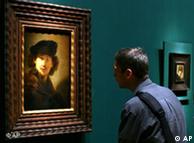
When it comes to opening a dialogue with the human psyche, a picture is worth a thousand words - at least according to business psychology student Kathalin Laser. She is among the volunteers who give Thursday evening art tours in Berlin's prestigious Gemaelde Galerie.
"It has always been a challenge to get people to take part because the word 'psychological' scares people," said Laser. "People are scared to get to know too much about themselves. Maybe it is typical German, but most people say, 'I'm perfect and don't have to work on myself.'"
However, under the guidance of the students, participants in the unique art tours do indeed discover quite a lot about themselves. Instead of hearing an art critic's technical analysis of a painting, they're asked what they see and feel when looking at a particular picture.
Different takes on the same thing
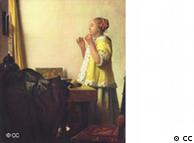 Bildunterschrift: Großansicht des Bildes mit der Bildunterschrift: Vermeer's "The Woman with the Pearl Necklace"
One of the paintings frequently highlighted by the student guides is "The Woman with the Pearl Necklace" by Johannes Vermeer. Painted in the 1660's, it depicts a young woman staring into the distance, with a glazed, dreamy look in her eyes. Light from the window illuminates her face, while the lower part of the painting remains in dark shadow.
"People tell us stories, like she might be pregnant, or she is in love and she is waiting for her lover," said Laser. "She is looking out of the window and yearning for something more. These are all the different stories people tell us, but it is the same topic, and the topic is the in-between."
Indeed, longing and uncertainty are emotions anyone can relate to.
"I felt like there is this dark side in this painting," said a 22-year-old on the tour. "There is this huge black spot and one question of mine was: What is under the table? Why is it so dark? But then I thought, I don't want to go there, so I concentrated on something else."
The tour experience helped her realize how she ignores or represses uncomfortable feelings, rather than confronting them.
Another participant, 27, said he gained a different insight into himself while contemplating the same Vermeer work.
"You can see in this picture that something doesn't fit, and you can see in your own life that something doesn't really fit," he said. "And you see this girl in the painting, and she looks somehow nice but somehow also scary, like old and very young." The painting captures a sense of transition, he concluded.
Getting to the heart of humanity
 Bildunterschrift: Großansicht des Bildes mit der Bildunterschrift: Art expresses universal feelings, conclude the tour guides
Gudrun Schoppe, one of the students giving the tours, was always interested in classical art but was only convinced of its effectiveness as a tool for delving into the modern soul after trying it out herself.
"You are sitting in front of this very old piece of art, and then in the next moment you connect with yourself, and your world, and your everyday life," said Schoppe. "You connect this very old piece of art with your problems. That is the point that fascinated me from the beginning."
The tour guides work with 10 different paintings. Each one evokes a specific fundamental human issue, like fear, loss, personal borders, belonging, or love. Certain paintings, they say, always invoke the same emotional responses among participants, although each person expresses it in a unique way.
"Maybe the same problems are always coming up because these are the main problems in our world that have existed since humanity exists," conjectured tour guide Pola Zuegge. "That's why it works with old paintings, because if you do art you try to express your unconscious and you are painting universal problems."
Art talk for the office
While they're still studying, Zuegge, Laser and Schoppe will continue to offer their psychology art tours in a museum. In the future, however, they plan to use the same technique within the corporate setting.
 Bildunterschrift: Großansicht des Bildes mit der Bildunterschrift: Can psychological art discussion improve work conditions?
But will company members be able to openly express their feelings when their boss, secretary, or coworkers are in the same room? Laser says they will. She is convinced that even managers and executives who immerse themselves in a piece of art will be able to let go of their professional roles and identities, see their colleagues in new ways, and find fresh ways of relating to each other.
"In a company there are different characters and different people deal with situations differently," said Laser. "And then you get them all together, sitting in front of one painting, and they all talk about how they deal with it….They are relating."
In many sectors, relating to other people is essential to business. But the guides have yet to find out whether the woman with the pearl necklace is able to close a few deals - or at least improve the office climate.
Author: Leah McDonnell
Editor: Kate Bowen